
![newsR.jp[ニュースアール]](/img/logo_kana.svg)
![newsR.jp[ニュースアール]](/img/head_logo.svg "newsR.jp[ニュースアール]")
- ニュース一覧
- Visiting Ōuchijuku Snow Festival / 大内宿雪まつりに行ってみた(日進堂印刷所)- 2026.02.25(水) 10:00
Visiting Ōuchijuku Snow Festival / 大内宿雪まつりに行ってみた
日進堂印刷所
2026.02.25(水) 10:00
Across Fukushima, winter brings a lively calendar of snow festivals. I recently wrote about the snow-clearing experience in Kaneyama Town and also covered the Nishiaizu Snow Country Festival. Each celebration has its own character, shaped by the history and spirit of the community that hosts it. This time, I’d like to share my impressions from visiting the Ōuchijuku Snow Festival.
福島では、各地で多彩な雪まつりが開催されます。先日、金山町の除雪経験の記事でもご紹介し、西会津雪国まつりも取り上げました。どのまつりにもそれぞれの魅力があり、その地域の個性が感じられます。今回は、大内宿雪まつりを実際に訪れて感じた印象をお伝えします。
→ https://newsr.jp/news/disp.html?id=6906
→ https://newsr.jp/news/disp.html?id=6974
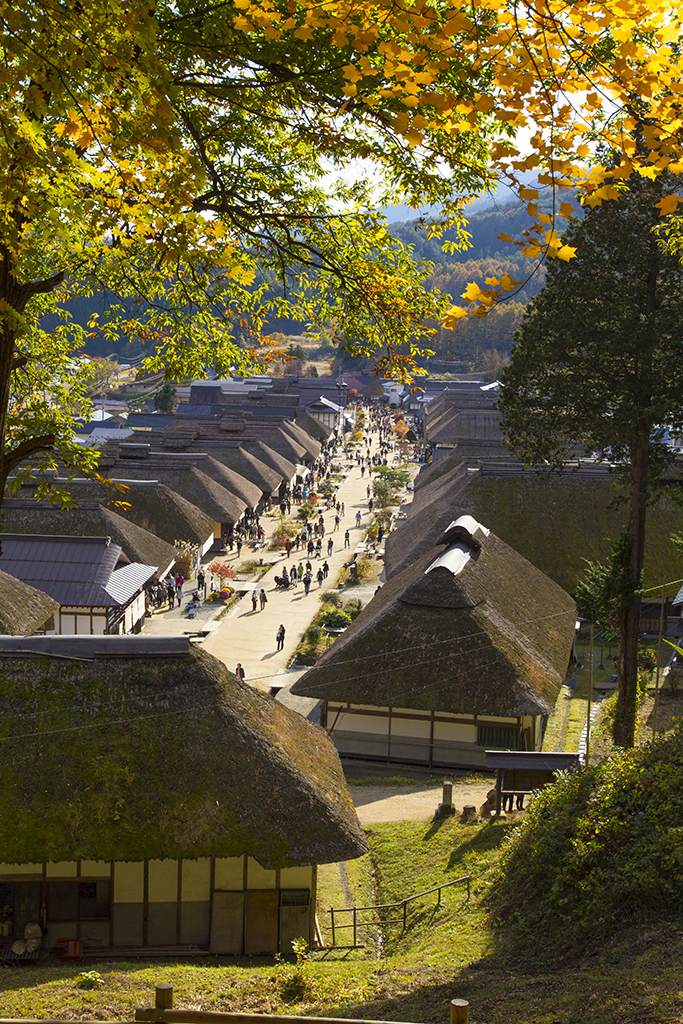
What is Ōuchijuku? / 大内宿とは
Ōuchijuku is a settlement located in Shimogō Town in Minamiaizu district. During the Edo period, it prospered as a post station along the trade route connecting Aizu and Nikko. When modern roads and railways were built in the Meiji era, traffic patterns shifted, and the area gradually took on a more agricultural character. In the Showa period, people began to value its thatched-roof streets and traditional lifestyle again, and local residents started preservation efforts. The district was later designated an “Important Preservation District for Groups of Traditional Buildings”. Since then, townscape improvements, seasonal events, better access, and media coverage have helped Ōuchijuku develop into one of Fukushima’s best-known historic destinations.
大内宿は南会津郡の下郷町にあり、江戸時代には会津と日光を結ぶ街道の宿場として栄えました。明治時代に国道や鉄道の整備で交通の流れが変わり、徐々に農村としての性格が強くなりました。昭和になると、茅葺き屋根の街並みや当時の暮らしが見直され、住民による保存活動が始まり、「国重要伝統的建造物群保存地区」として選定されました。その後、景観整備やイベント、交通の改善、メディア紹介などにより観光地として発展してきました。
In Ōuchijuku, two major seasonal events mark the year: the Takakura Shrine festival, known as the Ōuchi Mid-summer Festival, and the Ōuchijuku Snow Festival in winter. The Snow Festival began in 1986. During the event, sacred fire is lit inside snow lanterns, and the evening unfolds with fireworks and a variety of performances and activities. This year, the festival took place on February 14 and 15, and I visited on the first day.
大内宿では、夏に高倉神社の祭礼「大内半夏まつり」、冬に「大内宿雪まつり」が開催されます。1986年に始まった「大内宿雪まつり」では、雪灯籠に御神火が灯され、花火をはじめ多彩な催しが行われます。今年は2月14日と15日に開催され、私は初日に訪れました。
With several warm days before the festival, I wondered whether the landscape would still be blanketed in white. But as I entered Shimogō Town, high snowbanks lined the roads, and in Ōuchijuku the rooftops were gently wrapped in a soft layer of snow. During the day, though, water began to drip from the eaves, and meltwater flowed through the roadside gutters. These soft sounds were a quiet sign that spring was not far away.
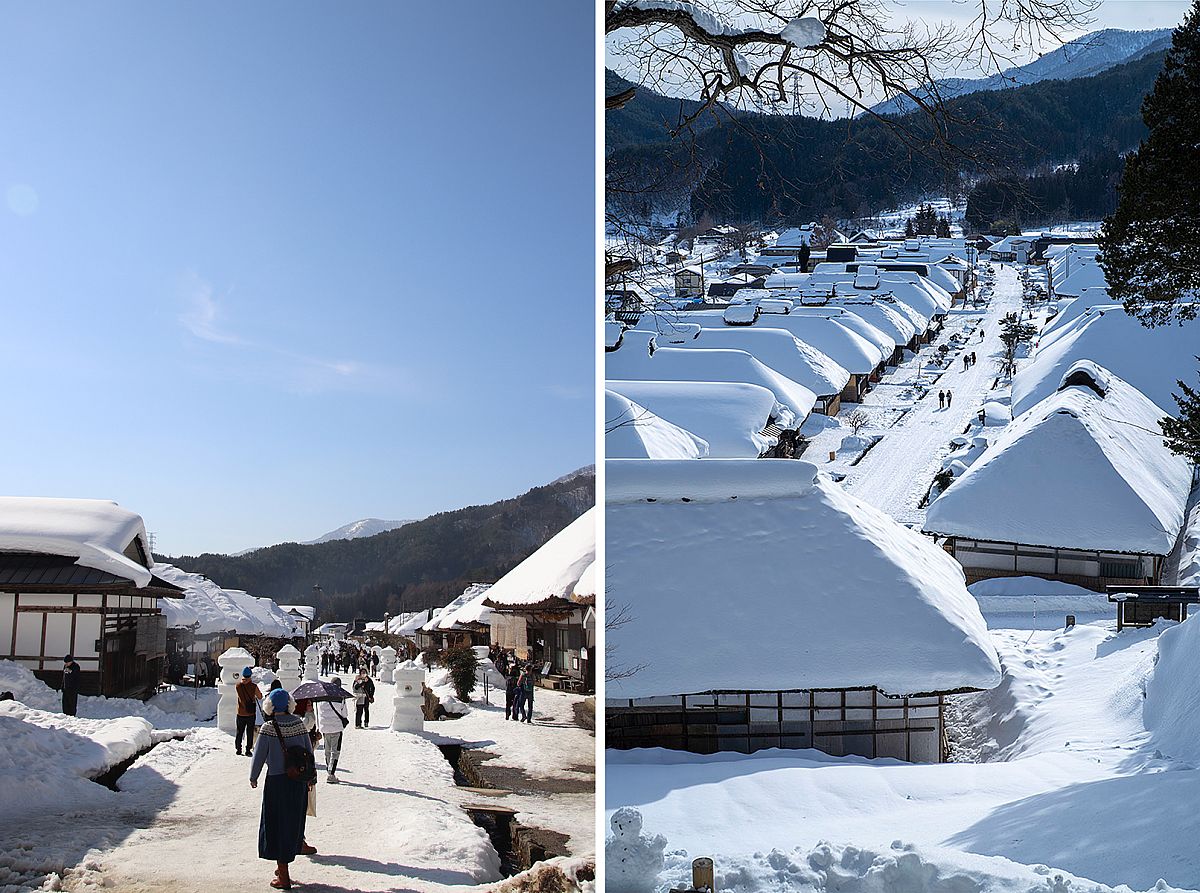
ここ最近は暖かい日が続き、真っ白な雪景色が見られないのではと心配していましたが、下郷町に入ると道路脇には雪の山が高く積もり、たどり着いた大内宿でも雪が建物の屋根を柔らかく包んでいました(とはいえ、日中は雪が溶けはじめ、屋根からぽたぽたと落ちる滴や、側溝をさらさらと流れる水の音に春が近づいているのを感じました)。
About Ōuchijuku Snow Festival / 大内宿雪まつりについて
Before the opening ceremony, I spoke with Mr. Yamauchi from the festival’s organizing committee about the event’s origins. He explained that in the past Ōuchijuku would be shut down during the winter months. The summer festival had long been a part of the community calendar, so the idea behind the snow festival was simple: to create a chance for residents and visitors to enjoy winter in Ōuchijuku together. The event is run primarily by local residents. Some have been involved since the very first festival nearly four decades ago, while others are in their thirties. Also, students from Tōyō University come every year to volunteer at the event. With Aizu’s four distinct seasons, Mr. Yamauchi said he hopes more people will experience Ōuchijuku transformed by its winter scenery.
Later, as I watched committee members and staff moving around the grounds, exchanging quick smiles and jokes as they worked, it was clear that they were enjoying it as much as anyone.
開会式の前に、雪祭り実行委員の山内さんにイベントの歴史を伺いました。かつては冬になると大内宿は閉ざされていたそうです。夏には祭りが開催されていたので、「冬の大内宿で住民と観光客が一緒に雪を楽しむ」という思いからこのまつりを始めたそうです。開催は集落の住民が中心となって取り組んでおり、中にはまつりの開始当初から関わっている年配の方や、30代の方もいます。さらに、研修で訪れている東洋大学の学生も毎年ボランティアで参加しています。会津地方は四季がはっきりと分かれているため、冬の魅力的な景色に変わる大内宿を多くのお客さんに見てもらいたいと山内さんは話しました。
その後、会場のあちこちで実行委員やスタッフが動き回り、笑顔を交わしている様子を見ているうちに、皆さんがこのまつりを心から楽しんでいると感じました。
Snow Festival Events / 雪まつり催し
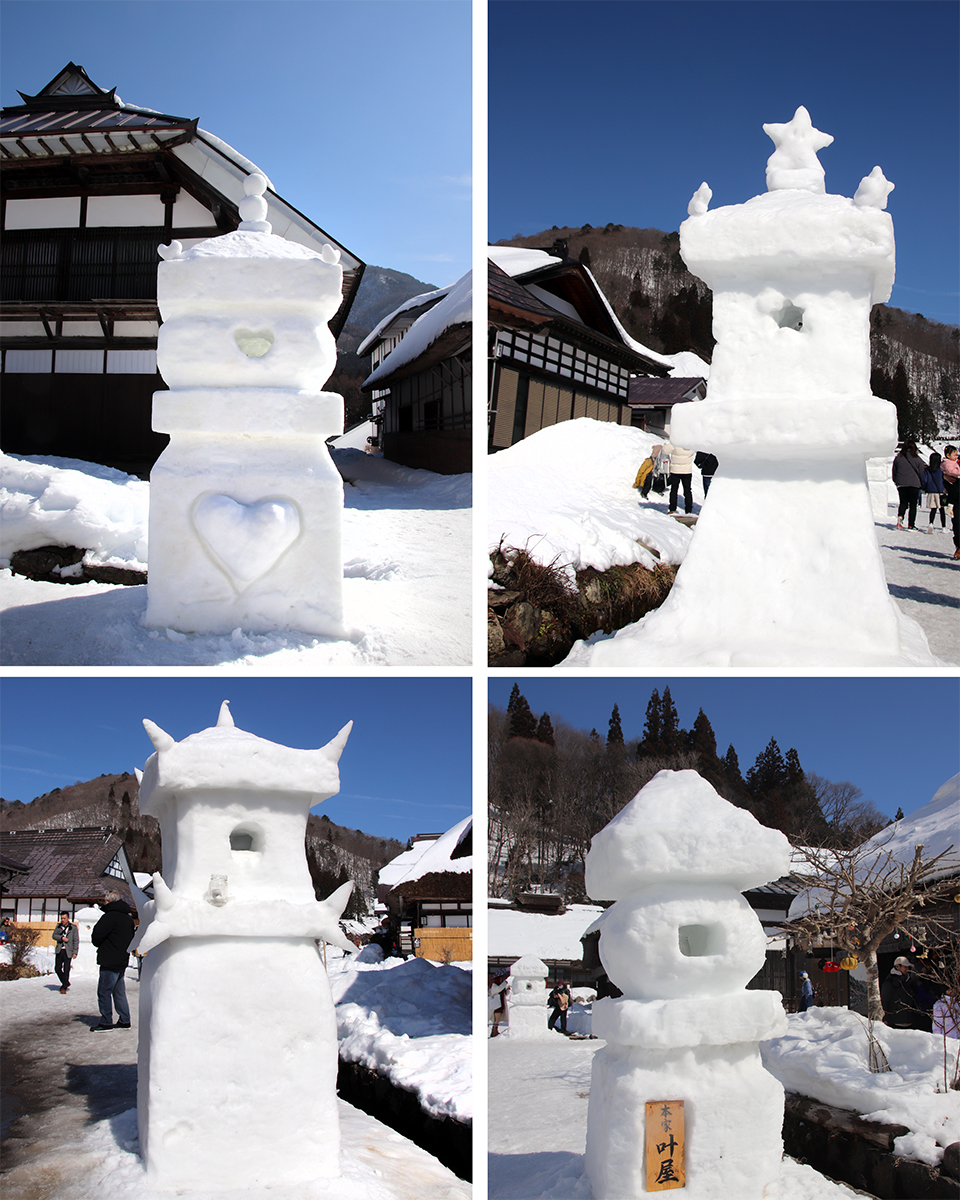
I started by walking around the food stalls and small restaurants. The old buildings were topped with snow, and rows of snow lanterns lined the main street. Each lantern looked different, and I found myself wondering about the personalities of people who had shaped them. Alongside the regular shops, temporary stalls added to the lively mood. There were souvenirs and local foods, as well as “chirimen” crafts (toys made from kimono fabric) and Aizu’s painted candles – the kind of setting that would appeal to anyone who enjoys browsing a good market. People carried grilled char, pork miso soup, or crêpes, while others lined up at soba restaurants. Aizu is famous for soba, and in Ōuchijuku some places serve “negi soba”, where a whole green onion is used in place of chopsticks, and diners bite into it as they eat. Mr. Yamauchi said that other soba shops also have their own flavor, making it worth trying and comparing.
最初に出店や食事処を巡りました。宿場町の建物は雪の白い帽子をかぶり、主な通りには夜に灯される雪灯籠が立ち並んでいました。一つひとつに個性があり、作った人の性格を考えてみたくなりました。通常営業の店に屋台も加わり、会場は賑わっていました。お土産や特産品のほか、可愛らしいちりめん細工や会津の伝統工芸品である絵ろうそくも人気で、様々なお店が並ぶ楽しさはマルシェが好きな人におすすめしたい雰囲気でした。焼きイワナや豚汁、クレープを手にする人、蕎麦屋の前に並ぶ来場者の姿も見られます。会津はそばの本場ですが、その食べ方を見ると、大内宿ではネギ一本を箸代わりにして、かじりながらそばを食べる店が有名です。
(また、ネギそばを専門にしない蕎麦屋でもそれぞれ独自の味があり、食べ比べを楽しめる、と山内さん。)
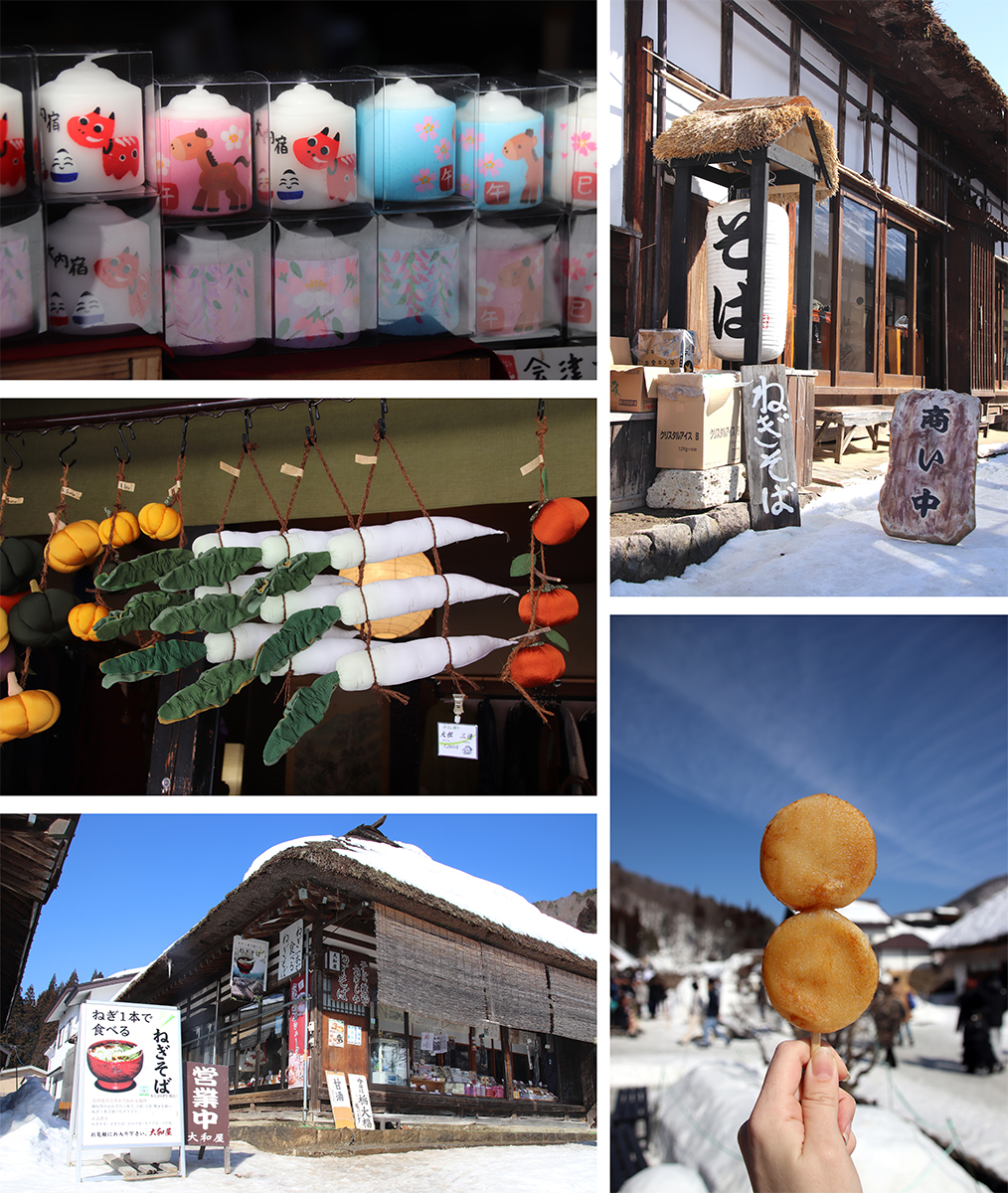
I heard a surprising number of foreign languages around the venue, so I stopped to speak with a few visitors. They had come from across East and Southeast Asia, as well as Europe and North America. Some told me they had traveled from other prefectures after hearing about the festival from friends, while others had flown in from overseas after seeing photos online. International tourism has been on the rise across Japan in recent years, but I was still struck by how many people had made the journey all the way to Minamiaizu district. It was both unexpected and quietly encouraging.
会場では外国語が多く聞こえていたので、何人かに声をかけてみると、来訪者は東アジアや東南アジア、ヨーロッパ、北アメリカなど様々で、「友人から聞いて他県から来た」という人や、「インターネットで写真を見て海外から訪れた」という人もいました。近年は外国人観光客が全国的に増えていますが、南会津まで足を運ぶ人がこれほど多いことに驚き、うれしく感じました。
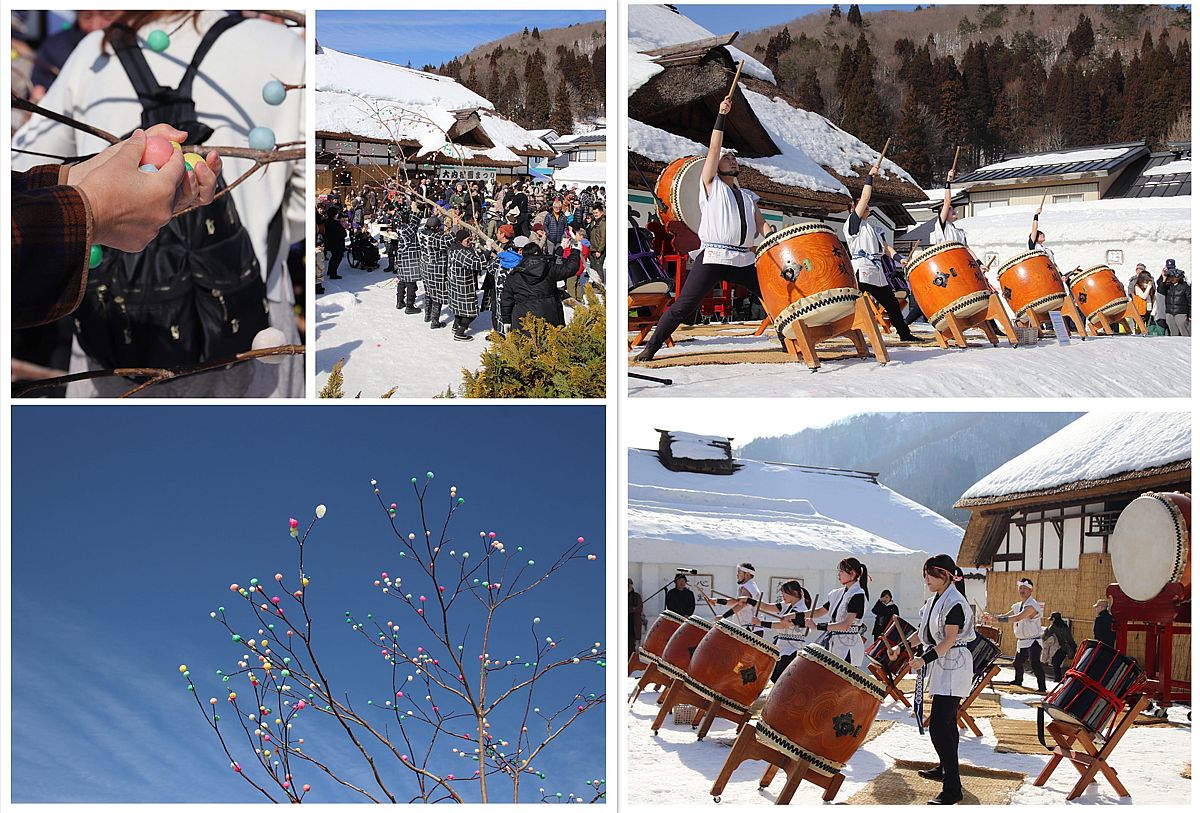
The program opened with “dango-sashi”, a traditional ritual in which visitors stepped onto the stage and skewered rice dumplings onto tree branches. The custom has long been practiced across the Minamiaizu region, and people of all ages took part with ease. I first assumed the dumplings might be made of clay — they looked decorative and there were so many of them. In fact though, they were real, edible rice cakes, which made the scene feel even more authentic. After the opening ceremony, the stage was used for a “kuji-mochi” giveaway. Staff climbed onto the roofs of the snow storehouses beside the stage and tossed rice cakes down to the crowd. I have seen mochi handed out before, but watching it rain from above was new to me and reminded me of Setsubun, the festival with the tradition of bean-throwing.
催しは団子差しからスタートです。来場者が舞台上で色とりどりの団子を木の枝に差していました。南会津郡の町村で昔から行われている行事で、子どもから高齢者まで手慣れた様子でした。私は当初「飾りだし、数もけっこうあるから粘土を使うのかも?」となぜか勘違いしていましたが、実際は食べられる普通の餅だったので「本格的だな〜!」と感じました。開会式の後は、くじ餅拾いが行われ、スタッフが雪蔵の屋根の上から餅をまきました。餅の振る舞いは何度も経験しましたが、餅を投げる光景を見るのは初めてで、節分の豆まきを思わせました。
Next came a performance by the Ōkawa Keiryū Taiko group. There is a taiko (japanese drums) group in the area where I live, so I am used to the deep reverberation of the drums. Even so, the sound in Shimogō felt distinctly different — not just in tone, but in the way it carried through the cold air. Each time I attend a festival like this, I’m reminded that even within Fukushima Prefecture, local culture shifts subtly from place to place. After the performance, visitors were invited to try the drums themselves. Children excitedly stepped onto the stage and practiced a few rhythms.
続いて、大川渓流太鼓の演奏です。私の住む地域にも太鼓の団体があるため、太鼓は聞き慣れていると思っていましたが、下郷町の演奏は響きや空気感がはっきり違っていました。このように祭りを訪れるたびに、同じ福島県内でも地域ごとに文化や特色が違うと気づきます。また太鼓を叩く体験では、子どもたちがうれしそうに舞台へ上がり、練習をしていました。
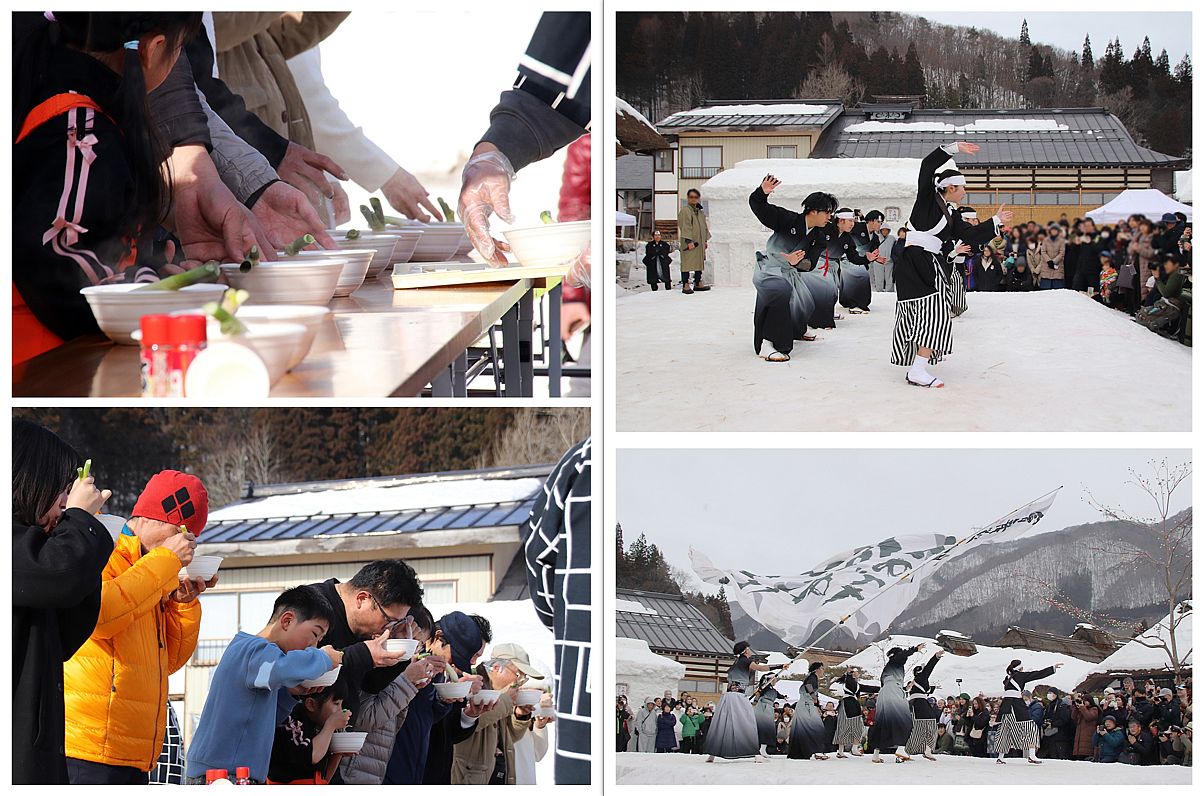
The diversity of the crowd became especially clear during the soba noodles speed-eating contest that followed. Each participant was introduced not only by name but also by their prefecture and hometown. Ten contestants — from children to adults — lined up on the stage. At first, I thought it would be a typical soba eating competition. Instead, the bowls held soba topped with a whole green onion, in Ōuchijuku’s signature style. The contestants tried their best as the audience cheered loudly. The mood was lively, with strangers encouraging one another.
その後は、そば早食い競争でした。参加希望者は子どもから大人まで10人。名前のほか都道府県や市町村もアナウンスされ、来場者の多様さを感じました。普通の早食いかと思いましたが、さすが大内宿です。出されたのはネギを丸ごと一本入れたそばでした。参加者は一生懸命頑張っている様子で大勢の観客も大きな声で応援し、会場はとても賑やかでした。
Later I watched a performance by the Gōjin Dancers, known for expressing the samurai spirit of Aizu through dance. People packed tightly along the sides of the stage and even stood atop nearby snowbanks, all eyes fixed on the performers. Have you ever found yourself staring into a bonfire, unable to look away from the shifting flames? I felt something similar here. One of the performers handled a large flag that moved in broad, fluid arcs. The motion was so natural and commanding that I couldn’t take my eyes off it.
次に、会津魂を舞で体現するパフォーマンス団体「郷人」の演舞を楽しみました。舞台の横や手前の雪の高台にも人がひしめき、魅了されている様子でした。焚き火の炎を思わず見つめてしまうことはありませんか?自然に揺れる炎の動きをずっと見てしまうのに似た感覚で、後方で旗を操る演者と、その大きくしなやかに動く旗から目が離せなくなりました。
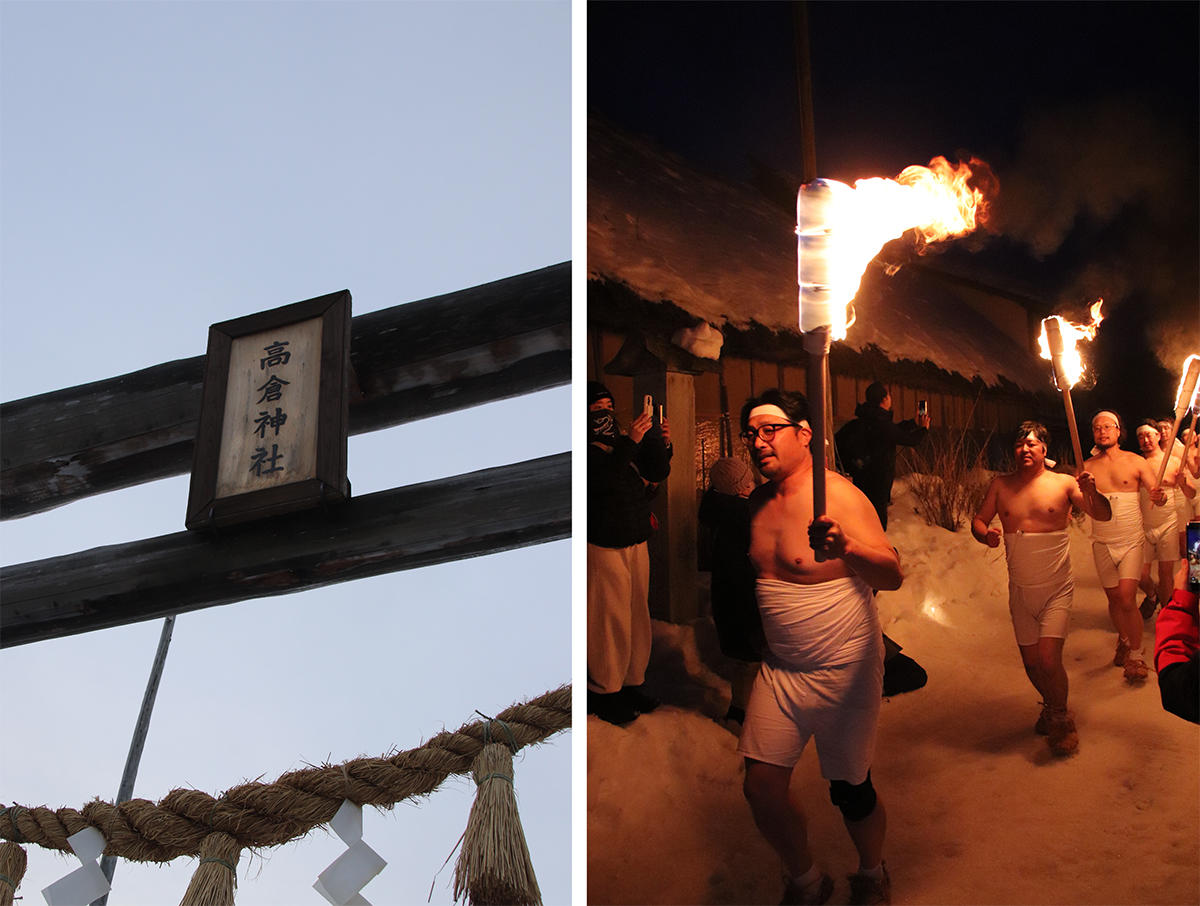
As dusk settled, visitors gathered beneath the gate of Takakura Shrine along the main street, their eyes fixed in the direction of the shrine as if waiting for a signal. Before long, the light appeared in the distance, followed by rhythmic shouts of “Wasshoi!” which is a traditional festival chant. During “Goshinka Taika” procession, men dressed only in loincloths carry the sacred fire from the shrine, passing through the gate and running into the settlement. I thought it must be physically demanding to dash through the cold in such minimal clothing. For those watching, however, the sight was striking and not easily forgotten.
夕暮れになると、来場者は高倉神社の門の下に集まり、合図を待つように神社の方を見つめていました。やがて灯がともされ、「わっしょい」という掛け声が聞こえてきました。「御神火載火(ごじんかたいか)」では、下帯姿の男性が御神火を手にして、門を通り集落内を走ります。ほぼ裸の姿で寒さの中を走るのは相当大変だと思いましたが、見る側としては記憶に残る面白い行事でした。
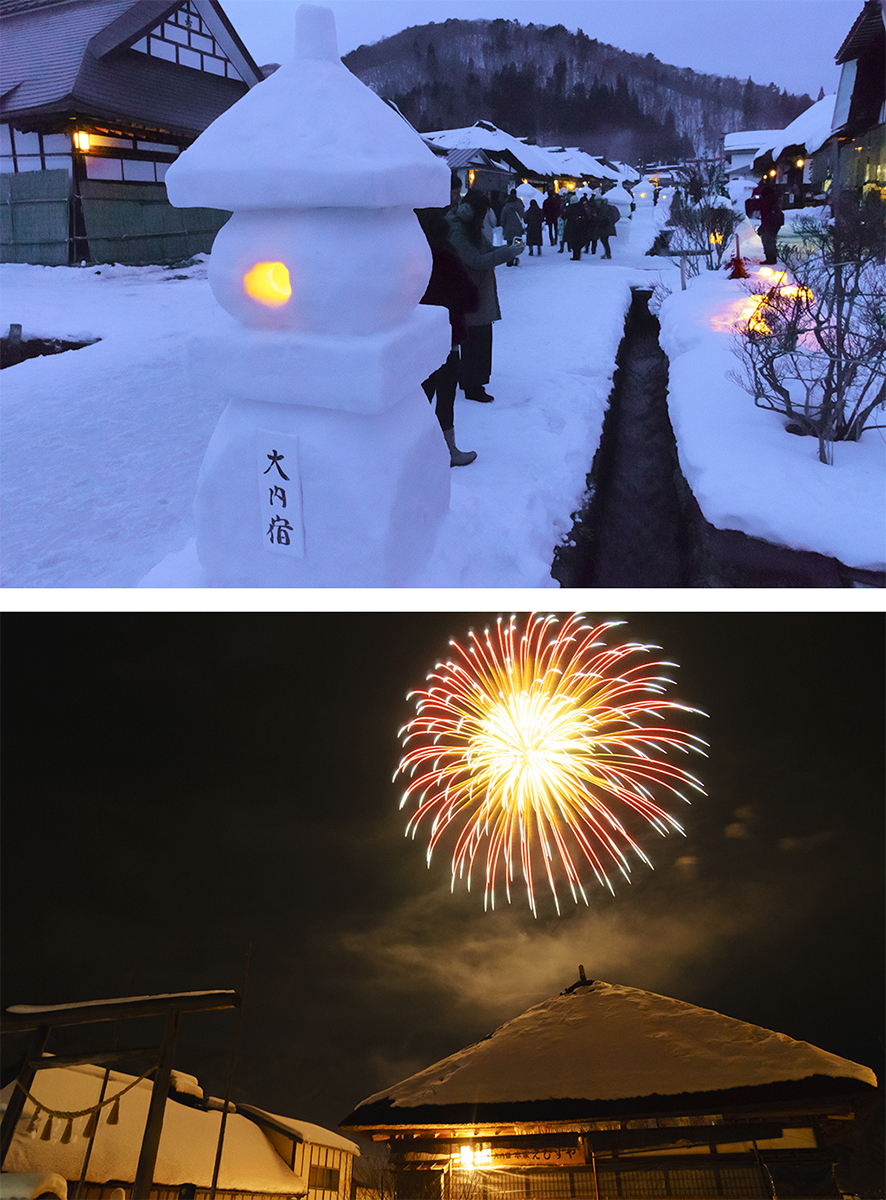
After the procession, fireworks lit up the sky, and residents and visitors looked up into the winter night. The snow lanterns stayed illuminated till night, drawing more people, and as I left, a steady line of cars heading toward Ōuchijuku caused light congestion on the narrow road. Driving back toward the Nakadōri region, I exited a tunnel to find the snow suddenly gone. The contrast was striking. A day in snow-covered Ōuchijuku had felt removed from ordinary time — almost like another world. If you are thinking about visiting next year, Shimogō Town in winter is worth the trip.
行事の後には打ち上げ花火が始まり、集落の人々や近隣からの来訪者、観光客がみんな冬の夜空を見上げていました。雪灯籠のイルミネーションが夜まで行われたため、それを見に訪れた人も多く、帰り道では大内宿へ向かう対向車が多く、少し混んでいたようです。中通りへ戻る途中、トンネルを抜けると雪のない景色が広がりました。雪に包まれた大内宿で過ごした一日は、どこか異世界のような体験でした。大内宿雪まつりに興味を覚えた方は、来年ぜひ下郷町へ足を運んでみてください。

お問い合わせは日進堂グループ各社まで
株式会社 日進堂印刷所 電話 024-594-2211(代)
トキワ印刷 株式会社 電話 0248-75-2145
株式会社 進和クリエイティブセンター 電話 024-594-2145
株式会社 エス・シー・シー 電話 024-593-0500
株式会社 Like-s 電話 024-573-8063
For inquiries in English, please contact the following email address: info@nisshindo.co.jp
※Please contact a sales representative for the estimate about translation.
※翻訳などに関してのお見積りは担当営業までお問い合わせください。
企業情報 企業情報
日進堂印刷所(印刷業)
〒 9602194 福島県福島市庄野字柿場1-1
TEL : 024-594-2211
ホームページ : https://www.nisshindo.jp/
ピックアップ記事(日進堂印刷所)
ピックアップ記事(新着)
【11/8開催】本との出会いを楽しもう「本博2026」 福島市曽根田駅が “本の世界” に
Postbox-newsR Provided by Like-s
2026.10.17(土) 12:00
幻想的なイチョウの大木!喜多方市の神社で今だけの秋の景色を見てみよう
エス・シー・シー
2026.10.17(土) 12:00
音楽・アート・マルシェが福島駅前に集結!
エス・シー・シー
2026.10.17(土) 09:00
17日の福島県は、高気圧に覆われるため、晴れるでしょう。
株式会社 ラジオ福島
2026.10.17(土) 07:23
キバラルリクビボソハムシ [ 自然さんぽ Take a walk in nature N0.
株式会社ココラム
2026.10.17(土) 07:00



![ふくしまの気になる情報を発信 newsR.jp[ニュースアール]](/img/foot_logo.svg)
© newsR.jp.