
![newsR.jp[ニュースアール]](/img/logo_kana.svg)
![newsR.jp[ニュースアール]](/img/head_logo.svg "newsR.jp[ニュースアール]")
- ニュース一覧
- Discovering Wild Flavors / 春は山菜!(日進堂印刷所)- 2026.05.18(月) 09:00
Discovering Wild Flavors / 春は山菜!
日進堂印刷所
2026.05.18(月) 09:00
Spring is the season for “sansai” — Japanese wild mountain vegetables. While early spring greens exist, “sansai” are the first to emerge as the weather warms. Since summer vegetables are still only seedlings, “sansai” now take center stage. Coming from a country with no mountains, I first encountered these wild plants in Japan. Back home, edible plants are typically categorized as “vegetables”, “fruits”, “herbs”, “berries”, and “mushrooms” (not technically plants, but a very familiar food). I was surprised to find that Japan treats mountain vegetables as a distinct category. The world of “sansai” is more complex than it appears. They are generally defined as "edible plants growing wild in mountains and fields", yet exceptions exist. For instance, “myōga” is both gathered and cultivated, while “udo” ranges from wild “yama-udo” to cultivated white “udo”. For us foreigners, who are not familiar with Japanese wild mountain vegetables, it can be very difficult to tell them apart just by appearance. Regardless, one thing is certain: “sansai” are delicious. In this article, I would like to explain what “sansai” are, introduce types commonly eaten in Fukushima, as well as some varieties popular in Tōhoku region (Northeast Japan) that remain rare in Kantō or Kansai regions.
春は山菜の季節です。もちろん、早春野菜もありますが、春先にいち早く味わえるのが山菜です。この時期夏野菜はまだ苗として成長途中なので、山菜が食の主役になります。私は山のない国の出身なので日本に来て初めて山菜に出合いました。向こうでは「野菜」「果物」「ハーブ」「ベリー」「きのこ」といったカテゴリーで分類していますが、山菜は独立したカテゴリーとして存在すると知って驚きました。しかも、山菜の世界は外から見ると意外と複雑です。一般には「山野に自生する、食用にされる植物」と定義されますが、例えばミョウガは野生のものだけでなく栽培もされていますし、ウドにも「山ウド」と「軟白ウド」があります。特に外国人にとっては、見た目だけで区別するのは至難の業です。それでも、山菜がおいしいことは間違いないです。今回は、外国人の読者に山菜のことを説明した後に、福島でよく食べられる種類、そして東北ではおなじみでも関東や関西ではあまり使われていない山菜もご紹介します。
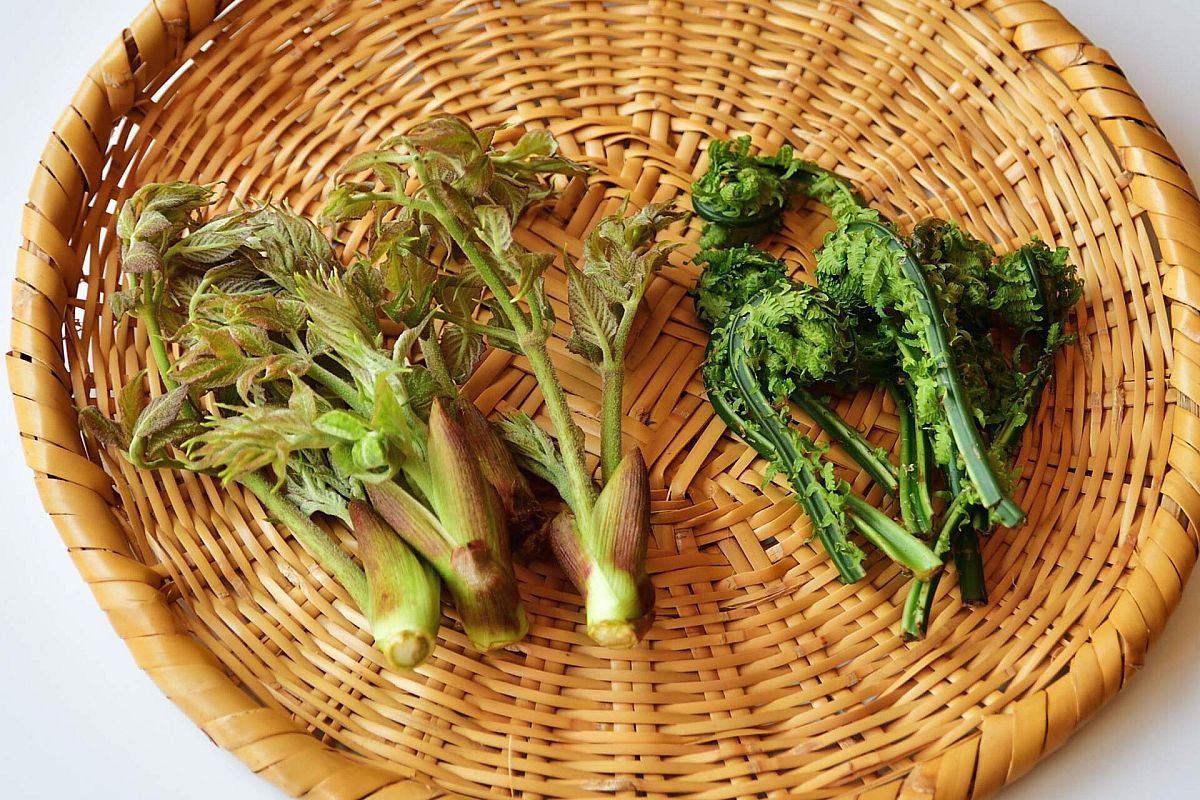
“Sansai” are edible plants that grow wild in mountains and fields, traditionally distinguished from cultivated vegetables. While low in calories, they are prized for being rich in vitamins and minerals and for their unique, bitter flavors. Some are now cultivated, while others can only be gathered in forests.
Currently, shipment restrictions on mushrooms and “sansai” remain in place in some Fukushima municipalities, depending on monitoring results, cultivation methods, and harvesting conditions (these restrictions apply to all forms of distribution, including markets, direct sales, online sales, and free sharing). For a long time, wild vegetables have been part of everyday life in mountainous regions, closely tied to the seasons. Sharing a harvest with family and neighbors, or bringing it to local gatherings, has been an important custom. In this way, “sansai” have played a role in strengthening social ties. The restrictions on gathering in Fukushima Prefecture have been a significant blow to some communities, representing the loss of an important routine. However, mountain vegetables have not disappeared from the table. Today, only products meeting strict safety standards are distributed in Fukushima’s markets and restaurants, so you can enjoy them with confidence. If you wish to eat “sansai” you have gathered yourself, it is essential to have them tested for radioactive substances at local municipalities to confirm their safety.
* Even where harvesting is not restricted, poisonous plants can easily be mistaken for mountain vegetables, so extra caution is needed, especially for beginners. On the other hand, local people who have gathered “sansai” for many years usually have the knowledge to tell the difference, so it is safer to go with someone experienced.
現在の福島県は、モニタリング結果や栽培形態・採取環境に応じて一部の市町村できのこや山菜の出荷制限(市場、直売所、通販、無償譲渡を含む)が継続されています。山菜は古くから山のある地域の暮らしに寄り添い、季節の移ろいを感じさせる身近な存在です。採れた山菜を家族や近所の人と分け合ったり、集まりに持ち寄ったりすることは山里の人の大切な習慣です。つまり、山菜は昔から住民同士のつながりを深める役割を担ってきました。福島県できのこや山菜の採取が制限されたことは、一部の地域の住民にとって大きな打撃になり、日々の大切な楽しみの一つが失われることを意味しました。しかし、山菜が食卓から消えてしまったわけではありません。現在、福島県の市場や飲食店で流通している山菜は厳しい基準を満たしたものだけなので、誰もが安心して味わえます。また、もし自分で採取したものを食べたい場合は、各市町村で放射性物質の検査を受け、安全性を確認することができます。
※ 採取が制限されていない地域であっても、山菜と間違えやすい有毒植物も存在するので、採りに行く際は特に初心者の方は十分な注意が必要です。昔から山菜を採ってきた地元の人はその違いを見分ける知識を持っているので、できれば経験者に同行してもらった方が安心です。
Widely Enjoyed Sansai in Japan / 全国で親しまれている山菜
The types of wild mountain vegetables you can find vary depending on terrain, elevation, and climate. However, many kinds (both wild and cultivated) are widely distributed across Japan and are well known. Here are some of the varieties that are especially common and firmly established in Fukushima as well.
地形、標高や気候によって各地域で出合える山菜は違いますが、多くの種類が栽培品を含めて広く流通し、よく知られています。その中から、福島で定番となっている山菜をいくつか挙げます。
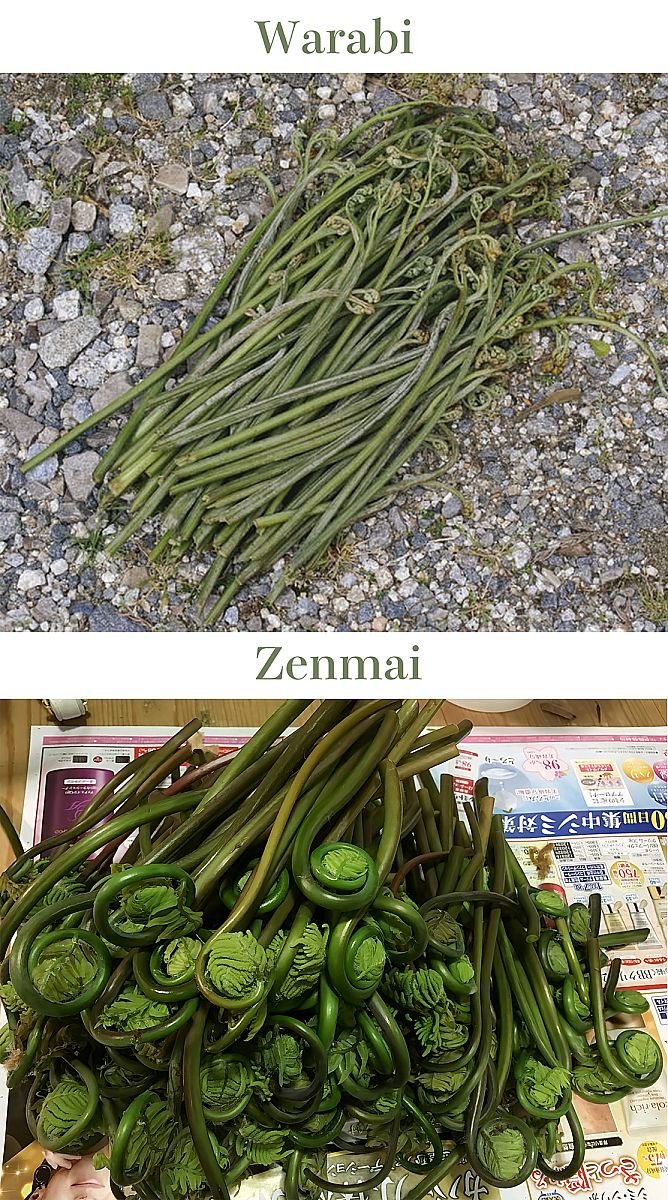
“Warabi” is a bracken fern harvested while the young shoots are still tightly curled, before the leaves open. It must be treated to remove bitterness and reduce natural toxins, usually by soaking it in hot water with baking soda, or by preserving it in salt. The flavor is mild, with a slight slipperiness and a crisp texture. When served steeped in a dashi-based sauce as a simple side dish (“ohitashi”), you can enjoy its natural taste and texture. It is also used in Japanese pickles, miso soup, and sushi rolls. In Fukushima, pre-treated “salted warabi” can be find in stores, making it an easy and familiar ingredient for home cooking.
ワラビは、葉が開く前の若芽を採取する山菜です。重曹と熱湯でのアク抜きや塩漬けによる毒性を低減する処理を行ってから調理します。風味はやや控えめで、ほのかなぬめりとシャキッとした食感が特徴です。お浸しにすると素材の風味と食感をそのまま楽しめます。漬物、味噌汁の具、巻き寿司などにも使われます。福島では下処理済みの「塩わらび」が販売されており、家庭でも扱いやすい身近な山菜です。
“Zenmai” (royal fern) also requires proper preparation to remove bitterness, but it is considered a more premium type of “sansai”. It has a soft, slightly sticky texture and a gentle flavor. It is especially suited for simmered dishes and is also used in “tsukudani” (simmered in soy sauce and mirin as an addition to rice), dressed dishes, and seasoned with sesame or walnuts. In Fukushima, sweet and savory simmered “zenmai” is often used as an ingredient in “Wappa-meshi”, a traditional dish from the Aizu region. It has long been part of local food culture.
ゼンマイも、アク抜きが必須な植物ですが、高級山菜の一つとされています。しっとりかつややねっとりした食感で、上品な風味があります。特に煮物に向いている他、佃煮、お浸し、胡麻和え、くるみ和えなどにしても食べます。福島では、甘辛く煮付けたゼンマイを会津の郷土料理である「わっぱ飯」の具材として使うことが多いです。伝統的な食文化として親しまれています。
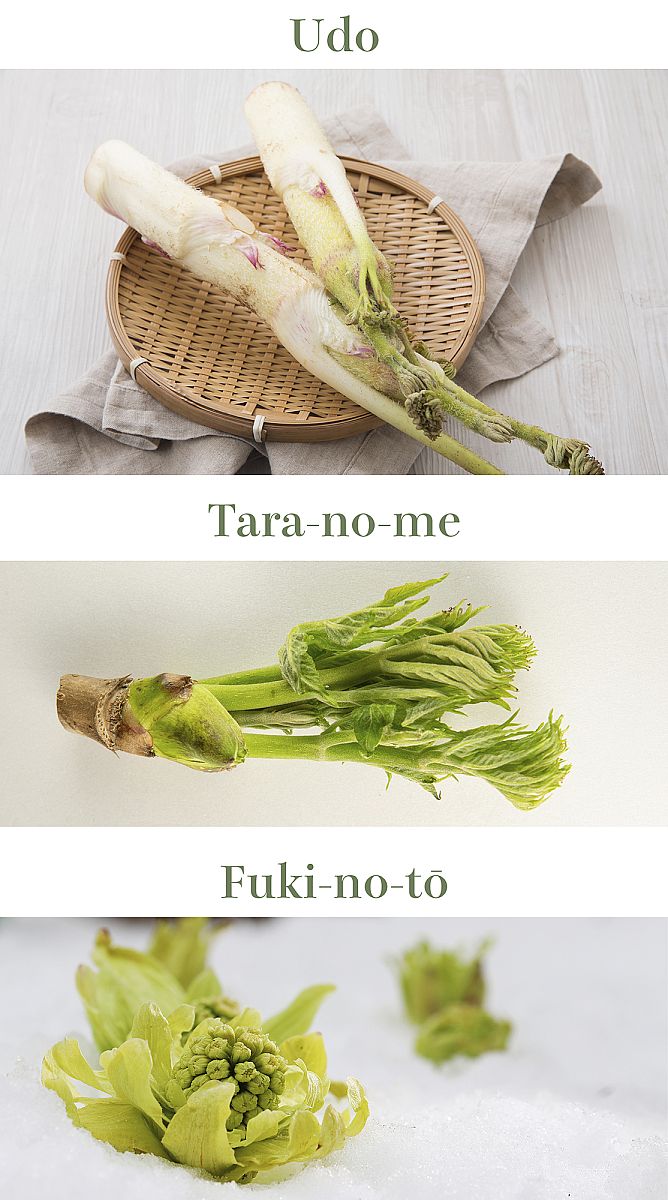
Another staple in Fukushima is “yama-udo”, or wild “udo” (sometimes called “mountain asparagus”). The young shoots and stems are edible, known for their fresh aroma and mild bitterness. The most tender parts can be eaten raw: they are peeled thickly, soaked in vinegar water, and eaten with miso, which brings out their rustic flavor. “Yama-udo” is also used in vinegared miso dishes, “kinpira” (sautéed and simmered side dish), and other seasoned sides, and can easily stand on its own as a dish. It is a familiar ingredient in Fukushima that appears regularly on the spring table.
福島で定番の山菜といえば山ウドです。若い芽や茎が食用になり、さわやかな香りとほろ苦さが特徴です。新鮮で柔らかい部分は生食も可能で、皮を厚めにむいて酢水にさらし、味噌などをつけて食べると野趣あふれる風味が楽しめます。酢味噌和え、きんぴら、和え物などにも使い、単体でも味わえる山菜です。福島でも比較的なじみのある山菜で、春の食卓に取り入れられています。
“Tara-no-me” (Japanese angelica tree shoots) is often called a “premium wild mountain vegetable that signals the arrival of spring”. It is widely known as a seasonal delicacy with a distinctive bitterness and rich flavor. In Fukushima, tempura is the most common way to prepare it, as frying softens the bitterness while highlighting its taste. It is also used in simple dressed dishes and “ohitashi”.
「春を告げる高級山菜」ともいわれているタラの芽は、季節を代表する山菜として広く知られています。独特のほろ苦さとコクのある味わいが特徴です。福島では、苦味がほどよく和らぐ天ぷらにするのが一般的な食べ方で、そのほかお浸しや和え物にしても味わいます。
Finally, “fuki-no-tō” is an essential part of spring cooking in Fukushima. These are the flower buds of the butterbur plant, known for their strong aroma and pronounced bitterness. Because they are quite bitter, they are usually boiled before cooking. Their bold flavor is sometimes described in Japan as an “acquired taste”. They are used in dressed dishes and simmered dishes, but in the Tōhoku region tempura is especially common. In the Aizu area, they are also made into “fuki-no-tō” miso, a preserved paste enjoyed as a condiment with rice. In Fukushima, they are widely recognized as a classic taste of spring.
最後に、福島の春の料理には欠かせないフキノトウを紹介します。フキのつぼみの部分で、強い香りとしっかりした苦味が特徴です。アクが強いため、下ゆでしてアク抜きをしてから調理します。風味は個性的で、いわゆる「大人の味」です。和え物や煮物にしても食べますが、東北では天ぷらが一般的な食べ方です。また、会津地方ではフキノトウ味噌として加工されており、保存食やご飯のお供として親しまれています。県内では春の定番として広く認識されています。
Sansai Popular in Tōhoku / 東北地方で人気のある山菜
In the Tōhoku region, where mountains are close and nature is rich, “sansai” have long been part of everyday food culture. In addition to widely known varieties, there are also types that are especially popular in Tōhoku and less common in other parts of Japan.
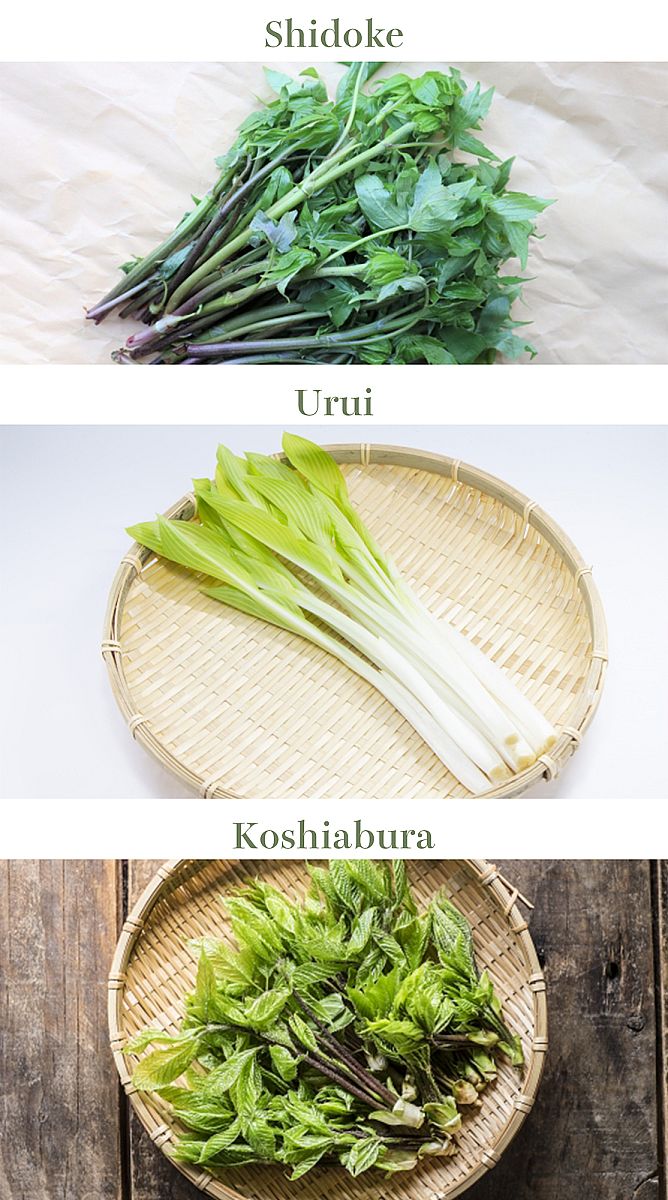
“Shidoke” is a mountain vegetable known across Japan, but it is not widely distributed in western regions. In contrast, it is very familiar to people in rural areas of Tōhoku. Its formal name is “momijigasa”: before the leaves open, it looks like a small umbrella (“kasa”), and once opened, the leaves resemble those of a Japanese maple tree (“momiji”). It is valued for its strong, distinctive aroma and mild bitterness. In Fukushima and across Tōhoku, it is used in a wide range of dishes, including “ohitashi”, dressed dishes, mountain vegetable soups, simmered dishes, and tempura.
シドケは全国的に知られている山菜ですが、西日本ではあまり食べられていません。一方、東北では山里の人に親しまれています。正式名称は「モミジガサ」といい、葉が開く前は傘のような形、開くともみじの葉に似た形になります。独特の強い香りとほろ苦さが魅力です。福島県を含め、東北地方ではお浸しや和え物、山菜汁、煮つけや天ぷらなど幅広く料理に使います。
“Urui” (hosta shoots) also grows wild throughout Japan, but it is especially popular in Tōhoku. Its appearance with white stems and green leaves at the tip resembles a long green onion. It has very little bitterness, with a slight natural stickiness and a gentle sweetness, making it milder and easier to eat than “shidoke”. It is commonly served in salads, dressed dishes, “ohitashi”, pickles, and stir-fries. In Furudono Town in Fukushima, local specialty noodles called “urui-udon”, made with kneaded “urui”, can be bought at the roadside station “Michi-no-Eki Furudono”.
ウルイも全国に自生していますが、特に東北地方で食べられます。白い茎の先に緑色の葉がつく姿は長ねぎに似ています。アクが少なく、ぬめりと優しい甘みがあるため、シドケよりもクセが少ないです。サラダや和え物をはじめ、お浸し、漬物、炒め物などとして食卓に並ぶほか、福島県の古殿町ではウルイを練り込んだ「うるいうどん」も作られています(主な販売先は「道の駅ふるどの」)。
Finally, “koshiabura” is another essential “sansai” in the region. Because it is difficult to cultivate, it is still not widely distributed, but it is highly valued and often called the “queen of sansai” for its rich aroma and deep flavor. Its young shoots are also relatively nutritious, containing higher amounts of fats and proteins compared to many other wild vegetables. It is one of the plants that best represents the “sansai” culture of Tōhoku. While tempura made from fresh shoots is especially popular, it is also enjoyed after proper preparation in dishes such as “ohitashi”, dressed dishes, and stir-fries.
さらに、コシアブラも忘れてはいけません。栽培が難しいため現在でも流通量は多くありませんが、「山菜の女王」と呼ばれ、強い香りとコクが好まれています。その若芽は脂肪やタンパク質を多く含む栄養豊富な食材です。東北の山菜文化を代表する存在の一つであり、生で揚げる天ぷらはもちろん、アク抜きしたお浸し、和え物、炒め物としても楽しまれています。
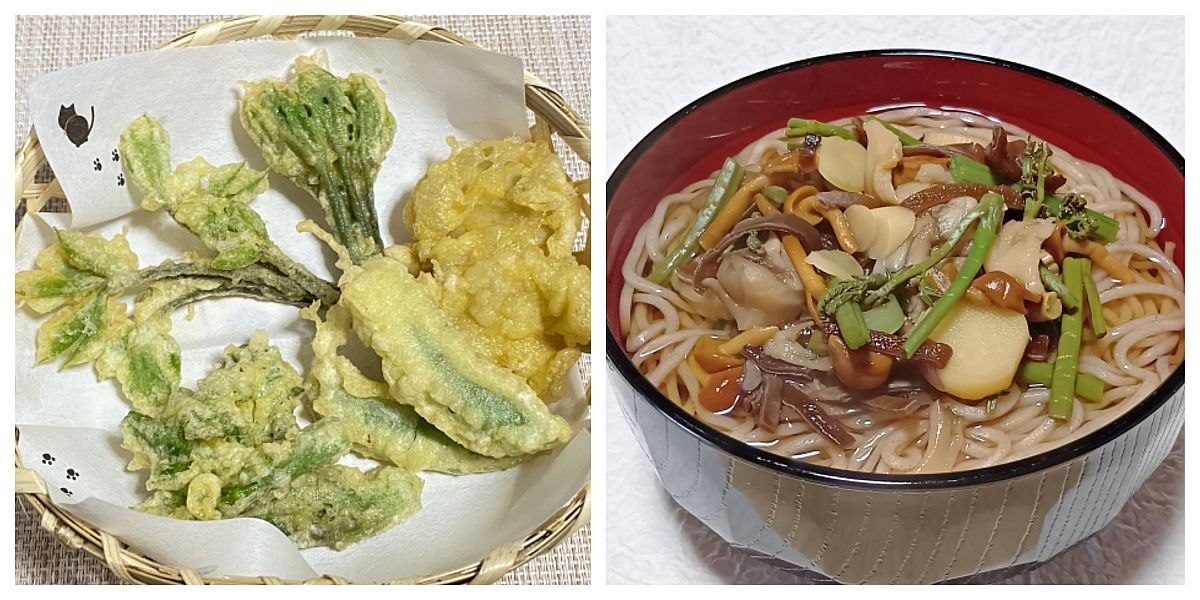
There are many more kinds of “sansai” you can find in Fukushima beyond those listed here. In particular, the Aizu region, as a mountainous area, has a deeply rooted wild mountain vegetable culture, and even the same plant can be prepared in completely different ways depending on the household or restaurant. If you want to try “sansai” in Fukushima, this season is a good opportunity. You can to check nearby restaurants for dishes like soba noodles or “tendon” that include them as tempura. Ordering a set that comes with assorted mountain vegetable tempura lets you sample several kinds first, and then you can decide which ones you might like to cook yourself.
福島で食べられる山菜は、この他にもまだまだあります。特に会津地方では山菜の文化が根づいており、しかも同じ山菜でも家庭や店によって全く違う料理に出来上がります。この時期に福島県で何らかの山菜を食べてみたいなら、近くの飲食店に蕎麦や天丼など山菜を天ぷらとして味わえるメニューがないかのぞいてみるのもおすすめです。山菜の天ぷらなどが付いたセットを注文し、まずは数種類を食べてみてから自分で作りたい料理を考えてみてはどうでしょうか?

お問い合わせは日進堂グループ各社まで
お問い合わせは日進堂グループ各社まで
株式会社 日進堂印刷所 電話 024-594-2211(代)
トキワ印刷 株式会社 電話 0248-75-2145
株式会社 進和クリエイティブセンター 電話 024-594-2145
株式会社 エス・シー・シー 電話 024-593-0500
株式会社 Like-s 電話 024-573-8063
For inquiries in English, please contact the following email address: info@nisshindo.co.jp
*Please contact a sales representative for the estimate about translation.
※翻訳などに関してのお見積りは担当営業までお問い合わせください。
企業情報 企業情報
日進堂印刷所(印刷業)
〒 9602194 福島県福島市庄野字柿場1-1
TEL : 024-594-2211
ホームページ : https://www.nisshindo.jp/
ピックアップ記事(日進堂印刷所)
ピックアップ記事(新着)
音楽・アート・マルシェが福島駅前に集結!
エス・シー・シー
2026.10.17(土) 09:00
17日の福島県は、高気圧に覆われるため、晴れるでしょう。
株式会社 ラジオ福島
2026.10.17(土) 07:23
キバラルリクビボソハムシ [ 自然さんぽ Take a walk in nature N0.
株式会社ココラム
2026.10.17(土) 07:00
【11/29】『縁 浄瑠璃へのいざない』を 開催します!【白河東文化センター】
Postbox-newsR Provided by Like-s
2026.10.17(土) 07:00
〔毎月17日は減塩の日〕日頃から減塩をこころがけましょう。
株式会社 ラジオ福島
2026.10.17(土) 00:01



![ふくしまの気になる情報を発信 newsR.jp[ニュースアール]](/img/foot_logo.svg)
© newsR.jp.