


- ニュース一覧
- Japanese Kimono Museum / 日本きもの美術館(日進堂印刷所)- 2026.11.09(月) 09:00
Japanese Kimono Museum / 日本きもの美術館
日進堂印刷所
2026.11.09(月) 09:00
When people think of Japan, words such as “samurai” and “matcha” immediately come to mind, and “kimono” is certainly one of them. Yet kimono are typically not considered as everyday clothes in modern Japan, and opportunities to wear them rarely arise. Even though I own a few kimono myself, I only wear them on specific occasions such as graduation ceremonies or the first shrine visit of the year. Recently, I heard about a place in Fukushima Prefecture where visitors can casually experience the charm and diversity of kimono, so I went to visit the Japanese Kimono Museum in a hot spring town of Kōriyama City called Bandai-Atami.
海外では、「日本」と聞いて思い浮かぶ言葉に「侍」や「抹茶」などがありますが、「着物」も間違いなくその一つといえます。しかし、現代の日本では着物は普段着とは別のもので、身につける機会も少ないようです。私自身も着物は持っているものの、袖を通したのは卒業式や初詣などのときくらいです。先日、福島県内で着物の魅力や多様性に気軽に触れられる場所があると知り、磐梯熱海の温泉街の一画にある「日本きもの美術館」を訪れました。
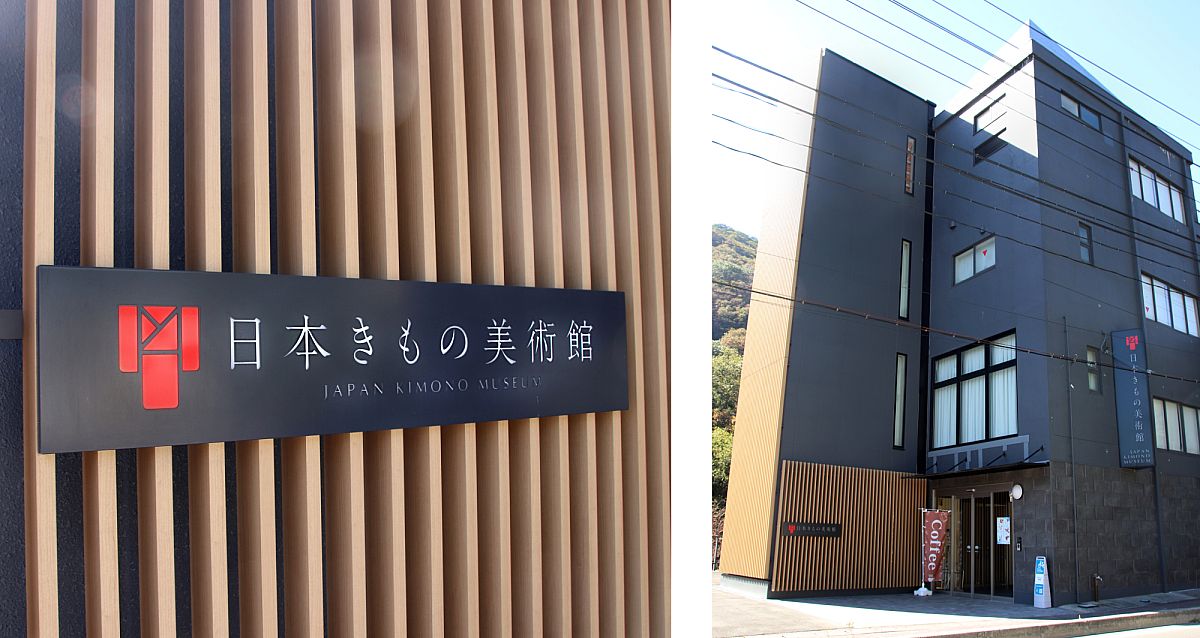
As you make your way into Bandai-Atami from central Kōriyama, past traditional “ryōkan” inns and surrounded by lush greenery, a modern building comes into view. Opened in October 2022, this facility immediately catches the eye with its exterior. I decided to take my time to look around as any regular visitor, and staff member Ms. Matsumoto kindly guided me through the permanent and special exhibitions.
郡山市街から磐梯熱海に入り、旅館が立ち並ぶ温泉街を進みながら豊かな自然を眺めていると、モダンな建物が見えてきます。「日本きもの美術館」は2022年10月に開館した施設で、スタイリッシュな外観が目を引きます。まず一般の来場者と同じ目線でじっくり見学させていただき、スタッフの松本里美さんに常設展示と企画展をご案内いただきました。
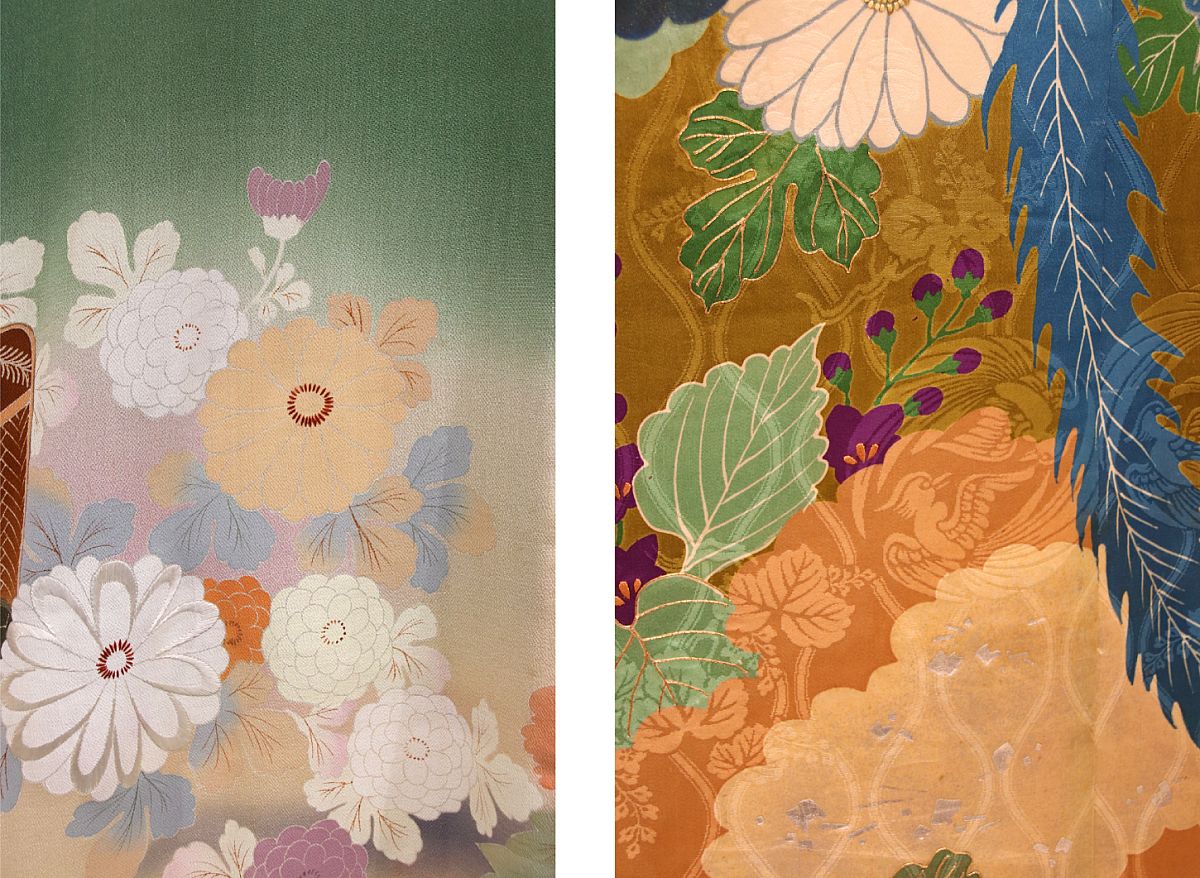
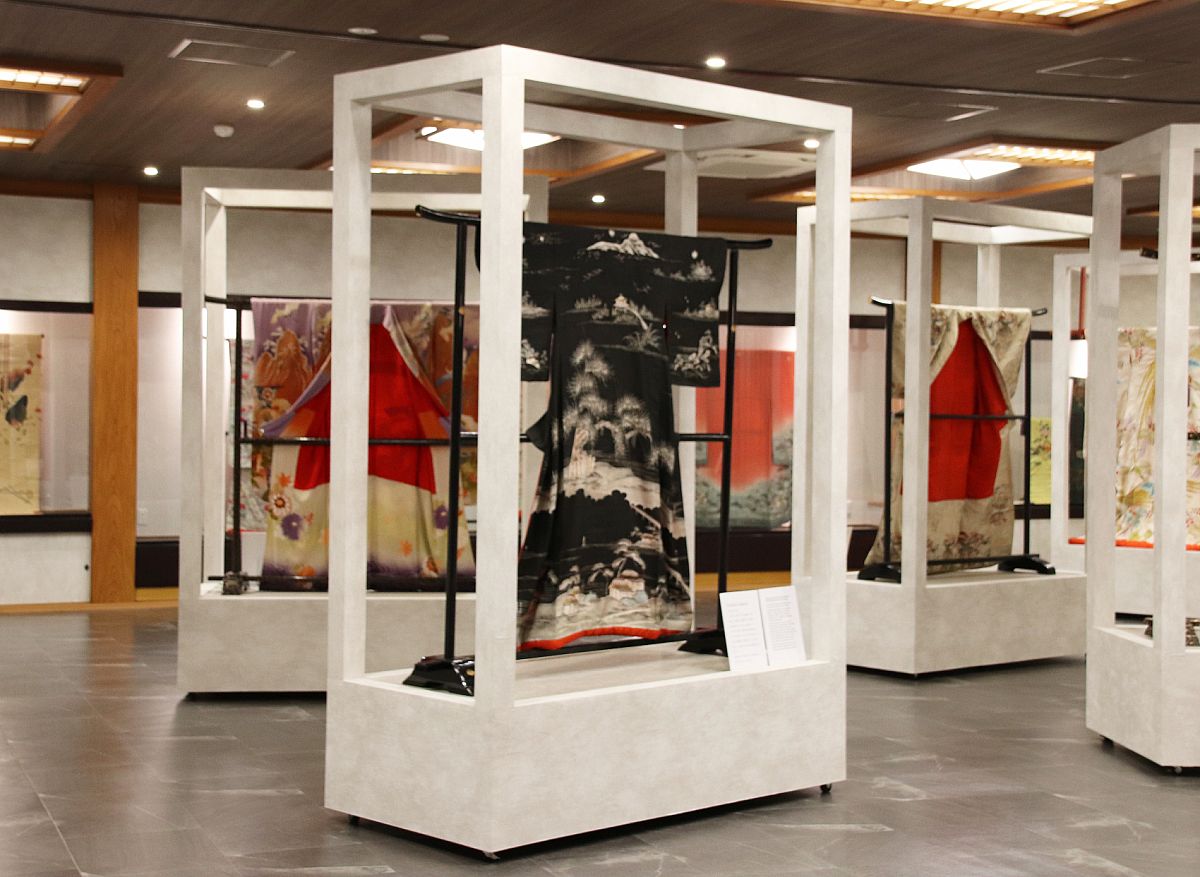
When I stepped inside the exhibition hall, I was instantly captivated by an array of art pieces spanning from the Edo period to the Showa era. From elaborate garments worn by “Oiran” entertainers to mass-produced pieces, the collection is remarkably varied. While the manufacturing techniques used to make all of them differ, I think it’s the diversity of designs that draws you in. Some pieces feature luxurious embroidery, and others have simpler designs; some depict people, while others are dedicated purely to flowers and animals. Looking closely, you begin to notice how styles evolved across eras. Each detail tells a story about the culture, trends, and exceptional craftsmanship of the time. Ms. Matsumoto explained the meanings woven into the designs, and the more I listened, the more interesting the excursion became. English-language guide materials were also available, which was very helpful for navigating unfamiliar Japanese art terms.
展示場に足を踏み入れると、江戸時代から昭和にかけてのさまざまな美術品が並んでいて、一瞬で目を奪われます。花魁(おいらん)がまとった豪華な着物から、大量生産された着物まで見られます。当然、着物の作り方は異なりますが、デザインそのもののバリエーションが豊かで、見れば見るほど引き込まれます。じっくり見ていくと、刺しゅうが贅沢に施されたものもあれば、シンプルな作りのものがあったり、人物が描かれた柄もあれば、花や動物だけの柄があったりして、時代による特徴の幅広さに気づきます。実はこれら一つひとつには理由があり、当時の文化や流行、そして職人の技術の素晴らしさを語っているのです。松本さんにデザインに込められた意味を解説していただき、聞けば聞くほど見学が楽しくなりました。また、英語の案内もあったので、聞き慣れない日本語の表現も確認できました。
I asked Ms. Matsumoto, whose passion for kimonos shines through, about her experience working at this museum:
“At first, I knew very little about kimono, but as I learned more on the job, I realized that certain motifs traditionally go together, such as the pairing of “phoenix and paulownia” or “lion and peony”. Discovering the trends and embroidery patterns of different eras is like going on a treasure hunt — it's genuinely fascinating. I hope people who aren't familiar with kimono will feel free to drop in and discover for themselves that kimono are not just for wearing, but also to look at and enjoy.”
着物への情熱があふれる松本さんに、実際にここで働く中での体験や思いを伺いました。
「最初は着物の知識がほとんどありませんでしたが、学びながら働くうちに『鳳凰と桐』『獅子と牡丹』のように、柄の組み合わせに伝統的なルールがあることを知りました。時代ごとの流行や刺しゅうのパターンを発見していくのは、まるで宝探しやゲームのようで本当に面白いです。普段あまり着物に馴染みがない方にこそ、『着物は着るだけでなく、見るだけでもこんなに楽しいんだ』と感じてほしいので、気軽に足を運んでいただきたいです」
Next, I spoke with coordinator Ms. Ōuchi. Originally from Koriyama City, she returned there after graduating university. Inspired by her mother’s love of the tea ceremony, she took up kimono as a hobby, wanting to learn more about something she had always been familiar with. That interest eventually became her career. She has been in charge of exhibitions and overall operations at the “Japanese Kimono Museum” since its opening.
続いて、コーディネーターの大内晴美さんにもお話を伺いました。郡山市出身の大内さんは、大学卒業後に地元へUターンした方です。茶道が好きなお母様の影響で、身近にあった着物を「もっと深く学んでみたい」と始めたことがきっかけになり、今では長年の本業となりました。「日本きもの美術館」では、開館当初から展示や運営全般を担当しています。
“There were several major goals behind opening the museum”, she explained. “One was to make kimono feel more familiar to people, but another was to contribute to the local community. People often ask, “Why open a museum in Bandai-Atami?” But actually, there is a deep connection between hot spring towns and kimono. At “ryōkan” inns, owners and staff wear kimono as part of their daily routine, while guests relax in yukata, so kimono culture is naturally woven into everyday life. Visitors who come to the museum often stay at local inns, while hot spring enthusiasts who stay in the area sometimes drop by the museum. We hope the Japanese Kimono Museum will become a place where people of this region can meet and connect.”
「美術館開館には大きな目的がいくつかありました。その一つは、皆様に着物を身近に感じていただくことですが、もう一つには地域貢献があります。『なぜ磐梯熱海に?』とよく聞かれますが、実は温泉地と着物には深い繋がりがあるのです。旅館の女将さんやスタッフの方々が日常的に着物を着たり、お客様が浴衣姿でくつろいだり、着物文化が生活に溶け込んでいます。遠方から美術館を訪れた方が旅館に泊まり、旅館の宿泊客が美術館へ立ち寄る流れがあり、地域全体の交流の拠点になるように目指しています」
“Our exhibition rooms are located on the second and third floors. We hold about three special exhibitions a year on the second floor, while the third floor is home to our permanent collection, which focuses on formal kimono such as “uchikake” and “furisode”, as well as bridal wear. Many pieces are displayed without glass cases, allowing visitors to get a closer look.”
「2階と3階が展示室になっており、2階では企画展を年に3回ほど開催しています。3階は常設展示で、打掛や振袖、婚礼衣装などのフォーマルな着物が中心です。当館の展示品はガラスケースに入れていないので、近くからじっくりご覧いただけます」
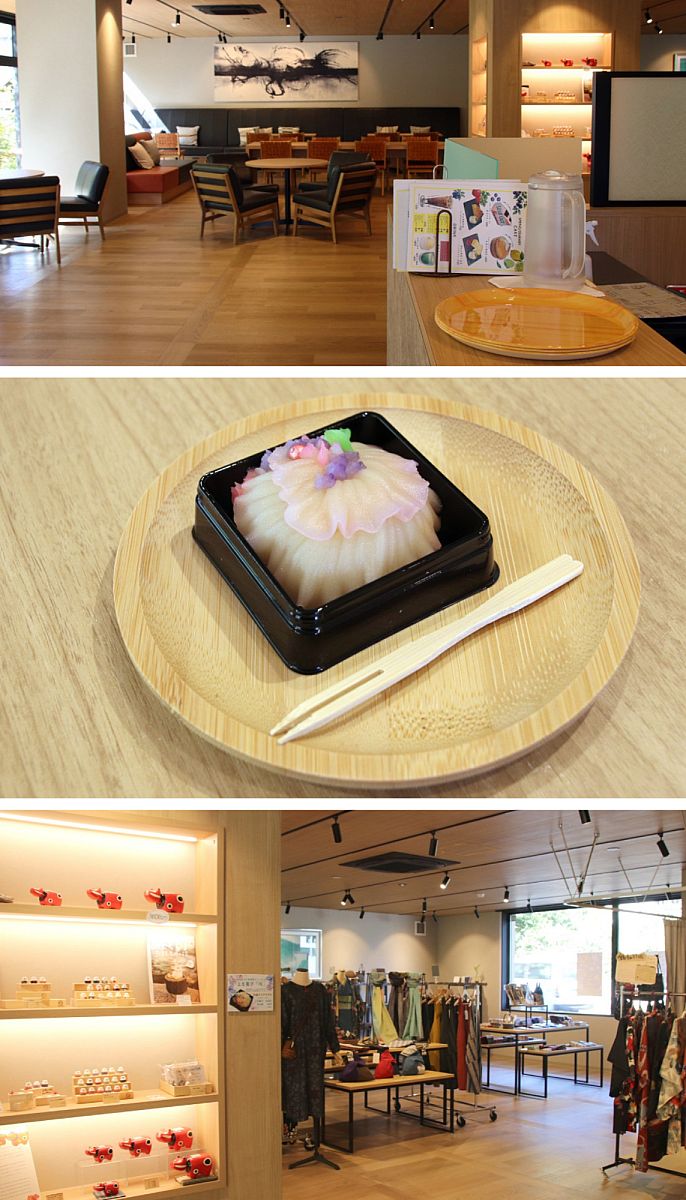
On the first floor, there are a welcoming café and a specialized shop. At the café, Ms. Ōuchi recommends “jōnamagashi” (traditional japanese sweets made from white bean paste) inspired by elegant kimono. The shop allows visitors to try on antique “haori” jackets and take photos in them, as well as to purchase other “haori” and traditional garments. I tried on a modern denim kimono which was an interesting experience.
さらに、1階には気軽に立ち寄れるカフェとショップがあり、カフェでは着物をモチーフにした上生菓子がおすすめということでした。ショップではアンティークの羽織を試着し、写真撮影が楽しめます。また、羽織やその他の和服を購入できます。私はデニムの着物を試し、このような体験ができてうれしいと感じました。
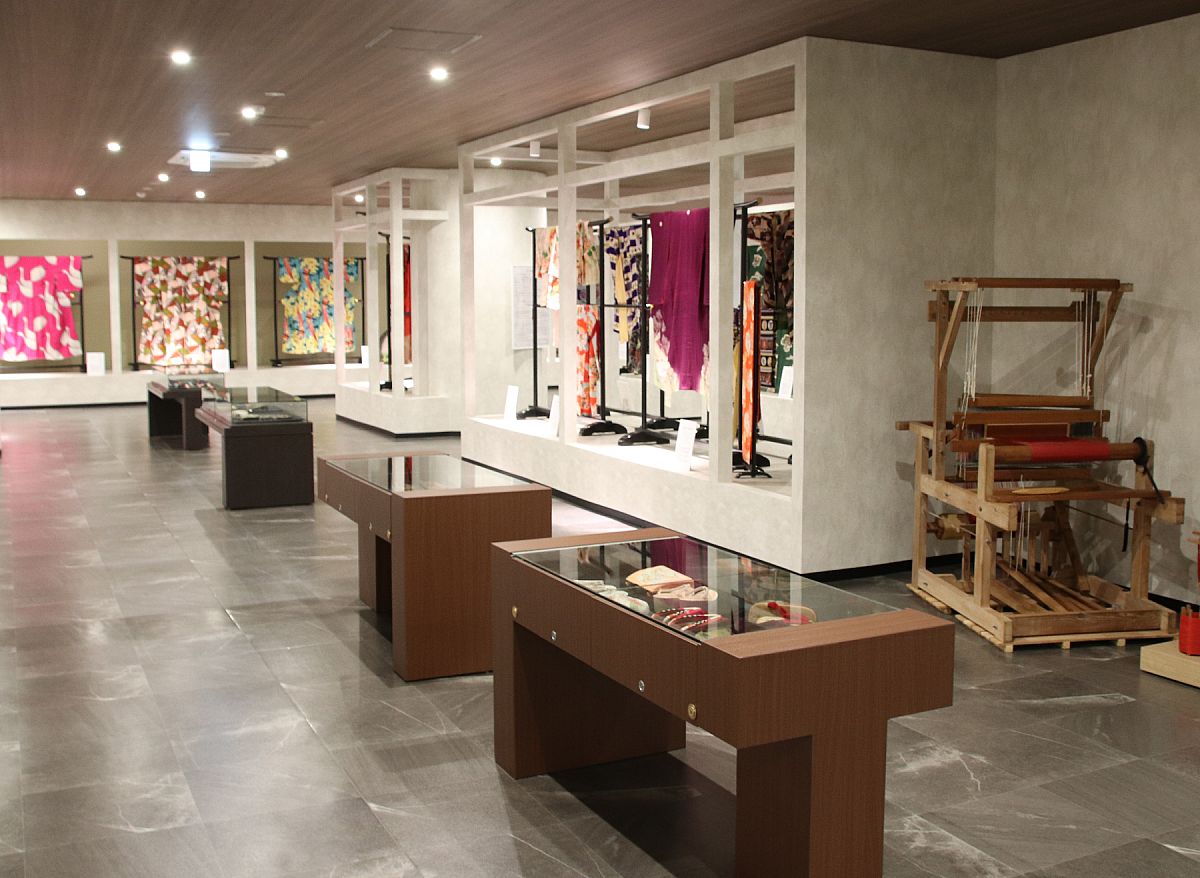
“It originally began as a private collection,” Ms. Ōuchi noted. “Today, the museum houses around 4,600 items, including not just kimono, but a wealth of accessories like “obi” sashes and “geta” clogs. Most of the pieces come from the northern Kantō region and Kyōto. The reason there are fewer Fukushima-made kimono reflects the regional production history. Despite the fact that Fukushima Prefecture has long had a thriving textile industry, luxurious kimono were predominantly sewn in Kyoto. Furthermore, everyday wear for regular people was often thrown away once worn out, so few have survived”.
また収蔵品については、「コレクションは元々、個人が収集したものでした。現在、当館の所蔵数は約4,600点にのぼり、着物だけでなく帯や下駄などの小物も数多くありますが、北関東や京都のものがほとんどです。福島県産の着物が少ないのは地域の生産史が関係しています。福島では昔から織物産業が盛んでしたが、婚礼用などの豪華な着物は主に京都で作られていたのです。また、庶民の日常着は劣化したら処分されてしまうことが多かったので、古いものが残りにくいという事情もあります」とのこと。
“Our current special exhibition, “Toberu Mono” (“Things That Fly”), was inspired by many kimono featuring bird patterns that we found in our collection. My personal recommendation is the vintage “furisode” (long-sleeved kimono) with classic patterns that show the skill of the craftspeople who made it. From a technical point of view, I find “Meisen” textiles (bright kimono made from pre-dyed threads that give the patterns a blurred effect) particularly remarkable. They are currently on display on the second floor. Woven in Isesaki City, Gunma Prefecture, “Isesaki Meisen” is extremely difficult to reproduce today, making it a rare type of kimono.”
「今回の企画展『飛べるもの』は、コレクションの中から鳥柄の着物がたくさん見つかったことをきっかけに誕生しました。その中で、個人的なおすすめは職人技が光る昔の古典柄の振袖です。また技法の面で特に素晴らしいと感じるのが、現在2階で展示している『銘仙(めいせん)』です。群馬県伊勢崎市で織られた『伊勢崎銘仙』は、現在では再現が非常に難しく、とても貴重な着物なのです」
Finally, I asked Ms. Ōuchi, who has worked at the museum for four years, what she finds most rewarding about her work:
"Whenever visitors tell me, “I wasn't interested in kimono before, but visiting the museum turned out to be very interesting and well worth it”, I feel that my work has paid off. It makes me really happy when I can see that our aim of making kimono more approachable has come across.”
同館で4年間勤めてきた大内さんに、最後にここで働く中での一番の魅力について伺いました。
「『最初は着物に全然興味がなかったけれど、実際に来てみたらすごく見応えがあって大満足』というお客様の声を聞けたとき、心から働きがいを感じます。『着物を遠い存在から身近なものに感じていただく』という当館のコンセプトがお客様に伝わったと実感できたときは、本当にうれしいです」
Blessed with rich natural surroundings, Bandai-Atami is a place where traditional Japanese culture is still woven into the daily lives of its residents. While kimono might feel a little distant in modern times, why not take a trip to the Japanese Kimono Museum to experience their charm and wonderful diversity firsthand?
豊かな自然に恵まれた磐梯熱海。かつては身近だった着物も、現代では少し遠い存在に感じられるかもしれませんが、この地で暮らし、働く人々の日常には、日本の伝統文化が今も確かに息づいています。ぜひ「日本きもの美術館」で、着物がもつ奥深い魅力と多様性に触れてみてはいかがでしょうか?
営業情報
■ Address / 場所
5-211 Atami, Atami machi, Kōriyama city / 郡山市熱海町熱海5-211
■ Open hours / 開館時間
10:00–17:00
■ HP
https://kimonomuseum.jp

お問い合わせは日進堂グループ各社まで
お問い合わせは日進堂グループ各社まで
株式会社 日進堂印刷所 電話 024-594-2211(代)
トキワ印刷 株式会社 電話 0248-75-2145
株式会社 進和クリエイティブセンター 電話 024-594-2145
株式会社 エス・シー・シー 電話 024-593-0500
株式会社 Like-s 電話 024-573-8063
各種取材(和・英)、撮影、翻訳をはじめ、
チラシ、ポスター、パンフレット、広報誌などあらゆるジャンルの印刷物の企画・製造のほか、
WEB、動画、SNS、商品開発、ブランディングまで幅広く業務を展開しています。
お見積りは担当営業までお問い合わせください。
・Editorial production (Japanese/English), photography, translation.
・Planning and production of a wide range of print materials (flyers, posters, brochures, newsletters, etc).
・Web and video production, social media management, product development, and branding.
For inquiries in English, please contact the following email address: info@nisshindo.co.jp
企業情報 企業情報
日進堂印刷所(印刷業)
〒 9602194 福島県福島市庄野字柿場1-1
TEL : 024-594-2211
ホームページ : https://www.nisshindo.jp/
ピックアップ記事(日進堂印刷所)
ピックアップ記事(新着)
〔11月10日きょうは何の記念日〕いい音・オルゴールの日
株式会社 ラジオ福島
2026.11.10(火) 00:01
[ 山本啓詁の和歌おみくじ ] 11月 10日 火曜日
山本啓詁の和歌おみくじ
2026.11.10(火) 00:01
「rfc NEWS Pickup」母の交際相手に暴行され男児死亡 いわき市 11月9日18時前放送
株式会社 ラジオ福島
2026.11.09(月) 18:35
「第5回はま・なか・あいづ 秋の菓子まつり in 福島県観光物産館」のPRで来社
株式会社 ラジオ福島
2026.11.09(月) 18:22
最後の最後で「ざぶとん」とは…笑
株式会社 ラジオ福島
2026.11.09(月) 18:07




© newsR.jp.